For many faithful Christians looking to donate to an Orthodox monastery, offering support is a profound act of almsgiving and spiritual connection. Monasteries serve as spiritual hospitals and powerhouses of continuous prayer for the world. However, while large, high-traffic pilgrimage centers often receive steady support from daily visitors, small and remote monasteries rely entirely on the labor of their own hands and the charitable almsgiving of the faithful.
Today, many Orthodox Christians do not live within driving distance of a monastery. Fortunately, physical distance does not prevent you from participating in the ancient tradition of monastic offerings. Whether you are seeking to support a brotherhood locally or remotely, here is a guide to understanding what types of gifts are actually the most helpful.
The Best Way to Donate to an Orthodox Monastery: Unrestricted Cash
In our personal lives, giving cash to friends or family can sometimes be perceived as impersonal or unthoughtful. However, this stigma absolutely does not apply to monasteries. In many ways, an abbot is like a CEO. If you ask a CEO what they would do with extra budget, they know exactly where to allocate it for the health of the organization. The same applies to an abbot. He knows the exact, immediate needs of his monastery and will know where best to allocate donated money.
Because of this, simple, unrestricted financial donations are actually the best and most practical gift you can offer. Giving money with no strings attached is a deep act of humility.
Sometimes, well-meaning laypeople fall into the trap of wanting to shape a monastery by attaching conditions to their gifts (“I will give you money for this specific project”). However, a monastery’s activities shouldn’t be governed by laypeople, lest it ceases to be a monastery. An unrestricted donation allows for the monastery’s spending to be done correctly, that is, according to the will of its abbot.
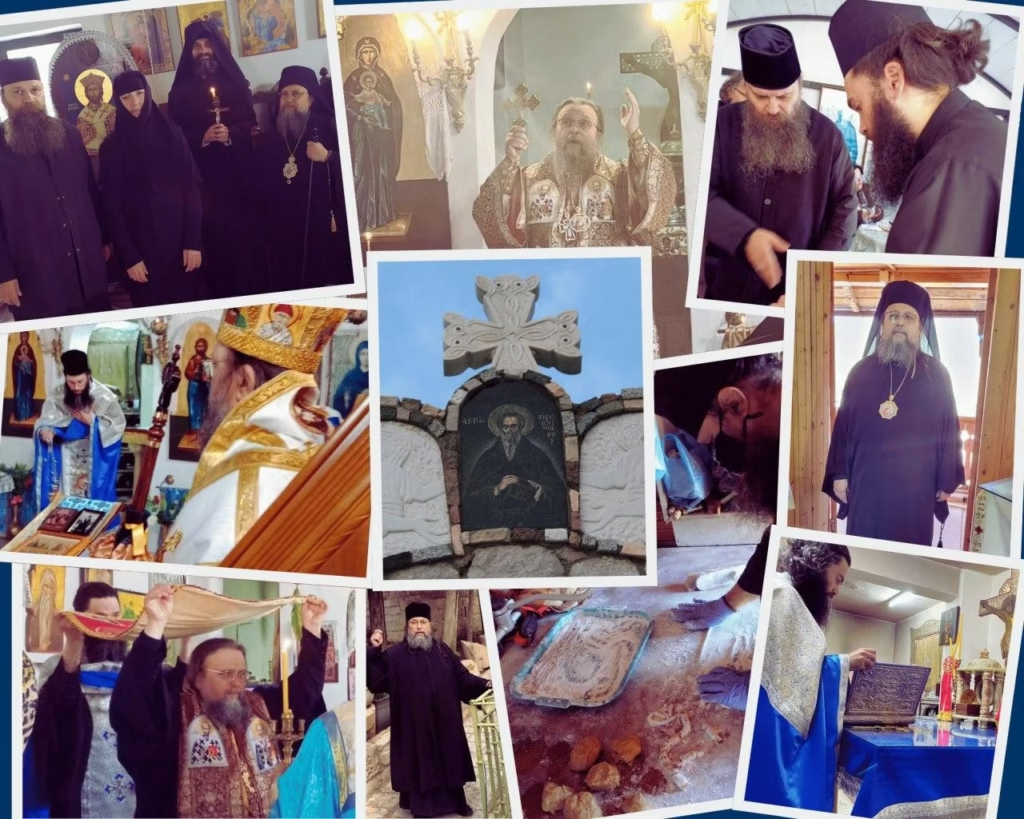
This freedom of allocation is particularly vital for small, independent communities. Our brotherhood at the Sacred Monastery of St. John of the Ladder is entirely self-funded and receives no external grants or state assistance. We support ourselves through our daily labor—crafting traditional incense, making original antimensia, and crafting Orthodox Church vestments and embroideries. You can read about our traditional incense-making process in our guide on how Orthodox incense is made.
However, direct almsgiving helps us cover the essential operational costs that manual labor alone cannot always meet, including:
- Daily Sustenance: Basic food and living expenses for our small brotherhood.
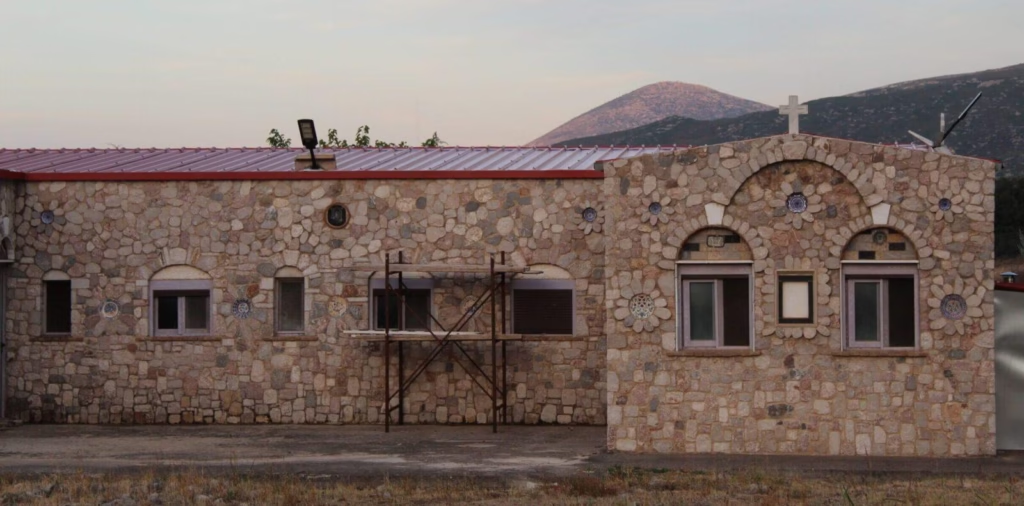
- Monastery Maintenance: Keeping our chapel, workshop, and pilgrim quarters maintained.
- Cathedral Service: Funding our weekly four-hour journeys to serve and maintain the Sacred Cathedral of St. Paraskevi in Attiki.
If you wish to support our daily life and ministry, you can make a direct, unrestricted offering below.
Orthodox Donation & Almsgiving | Support Our Monastery
Your direct almsgiving and Orthodox donation helps sustain our self-funded monastic brotherhood. Every gift contributes directly to the maintenance of our monastery, our weekly service at the Cathedral of St. Paraskevi, and our ongoing missionary works.
The Fading Tradition of Olive Oil Offerings
Historically in Greece, the relationship between the laity and the monasteries was intimately tied to the land. Families would set aside a portion of their harvests and bring them to their local churches as pious offerings to God. Along with flour for prosphora and communion wine, olive oil was one of the most vital staples brought by the faithful to keep the church’s vigil lamps burning.
In regions like Attica and Boeotia, the olive harvest traditionally began just after the feast of St. Demetrios. One could hear what sounded like angels in the fields, as nuns perched in the olive trees recited the Akathist Hymn to the Mother of God by heart while harvesting by hand.
Today, fewer families tend ancestral olive groves, and the custom of bringing oil for the church has nearly vanished. Consequently, the responsibility of sourcing oil and keeping the vigil lamps fueled falls heavily on the monastics themselves.
Bringing a bottle or container of olive oil to a monastery is a wonderful, traditional gift, and no monastery will turn away an offering of oil.
However, if you cannot visit physically, you can still participate in this ancient tradition online. An offering of just $2.99 provides enough olive oil to keep a single vigil lamp burning for an entire day.
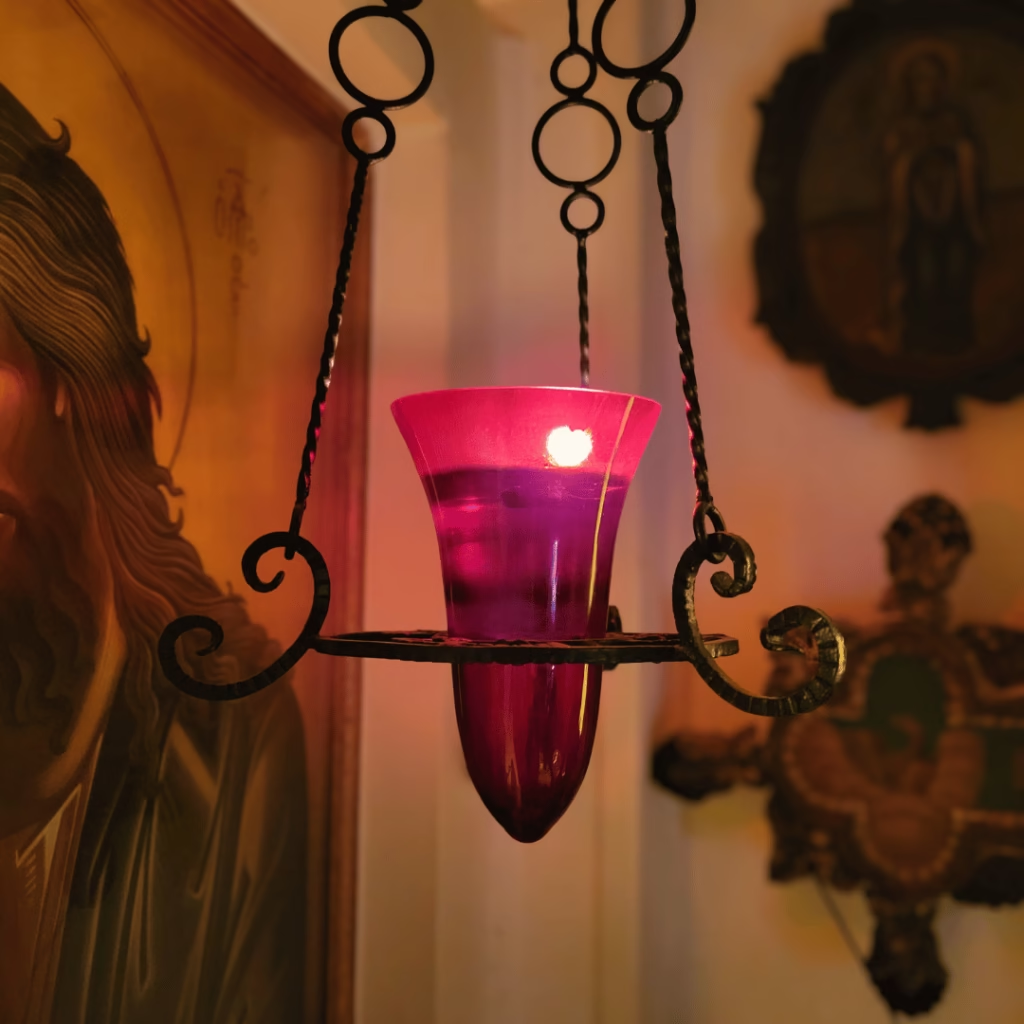
Light a Vigil Lamp for a Day
Keep a sanctuary lamp burning before the holy icons while commemorating your loved ones in prayer. Your contribution of <strong>$2.99</strong> fuels one sacred olive oil vigil lamp at our monastery for a full 24 hours.
- 🕊️ Sacred Monastic Offering: Directly supports our brotherhood in maintaining continuous sanctuary flames in Boeotia, Greece.
- ✍️ Name Commemoration: Submit the names of your living and departed loved ones that your offering is on behalf of.
- 🚫 No Physical Shipping: This is a pure spiritual offering of almsgiving; no physical goods will be shipped, and no shipping fees apply at checkout.
- Daily Multiples: Select a quantity of 1 for a single day, 7 for a full week, or 30 for a month of burning.
Giving Physical Gifts and Supplies
When giving physical goods, sticking to practical staples is a safe approach:
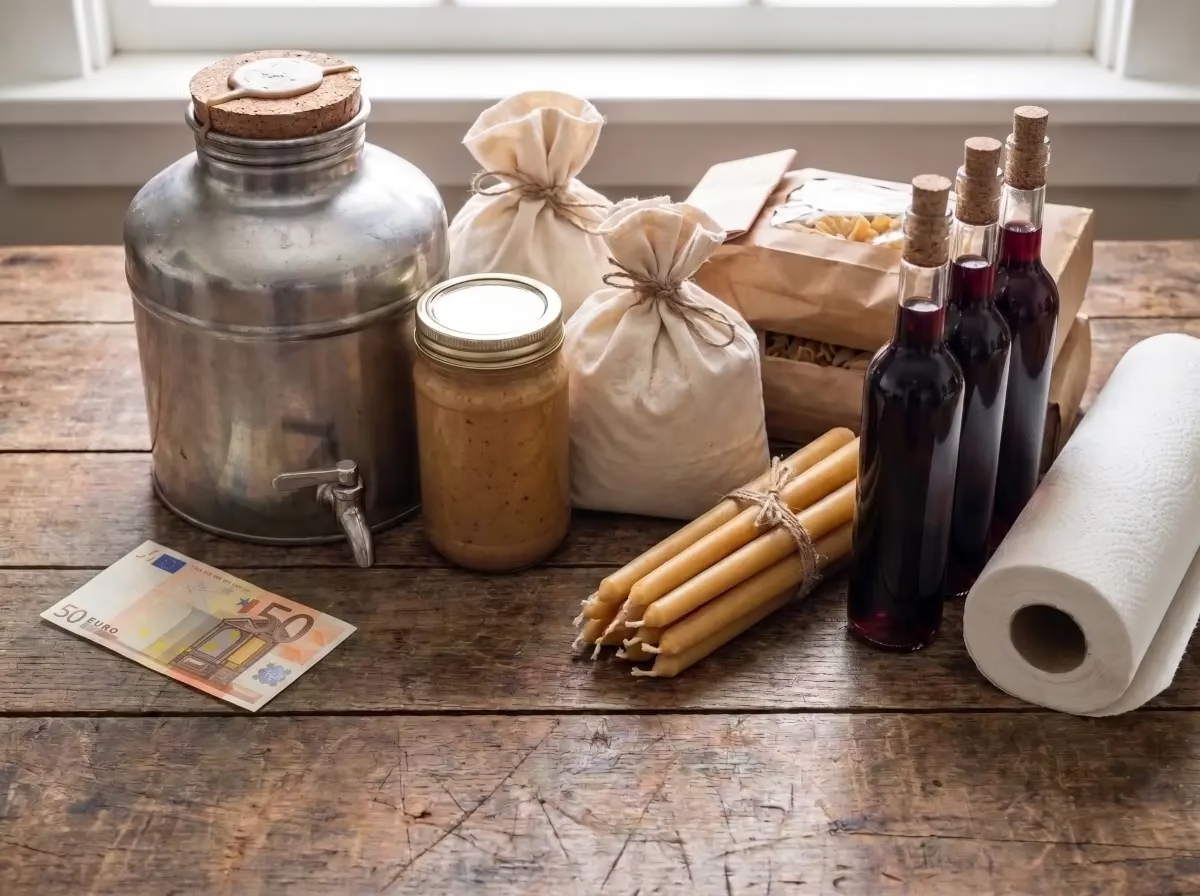
- Fasting Foods: Long-life, unrefrigerated items are perfect because they can be stored for a long time and the monastery can use them as needed. Excellent choices include halva, honey, oil-free peanut butter, tahini, dried pasta, and flour.
- Liturgical Supplies: Consumables for church services—such as beeswax candles, prosphora, sulfite-free communion wine, and charcoal discs for incense—are constantly in demand.
- Household Staples: Everyday basic bathroom and kitchen consumables like paper towels, toilet paper, and cleaning supplies will almost certainly be welcomed. Monasteries are isolated, and therefore these items are seldom convenient to replace.
If you have other ideas for things to donate, it is always best to discuss them with the abbot or abbess first to ensure your generous thought matches their current needs.
Furthermore, if you wish to give a particular gift to a specific monk or nun, it is good to discuss it—or simply give it to their abbot or abbess. In the monastic life, offering a personal gift to a monk or nun without their superior’s knowledge is similar to giving a gift to a child without their parents’ consent.
If you are a remote supporter planning to ship a care package, please bear in mind some of the logistical hurdles of isolated monasteries. Many monasteries are off the mail grid and cannot have mail delivered directly to them, which means they have to make a long trip to a distant pickup location to receive parcels.
In countries like Greece, customs authorities can also hold international care packages in custody and charge the monastery tax on the imported items.
Care packages are very thoughtful and personal gifts, but can create more work for a monastery than a giver intended. If you want to mail a care package to a monastery, it’s probably a good idea to first discuss your intention with the abbot.